The first half of the year was, in many ways, about starting out. Lumen Association is still a young organization. We are still finding and building our path, but in the past few months we have already taken part in several programs, events, and partnerships that clearly show why we started this work.
We wanted to be present locally, connect with other civil initiatives, help where we can, and start talking in a simple way about the topics that matter to us: digital access, accessibility, digital literacy, technology, learning, and community.
This first half-year was not about a large institutional background, big budgets, or ready-made systems. It was much more about volunteer work, member contributions, donations, our own tools, a lot of organizing, and the idea that small steps can also create visible and useful results.
Where did we start?
The goal of Lumen is to bring technology closer to people and communities where it can provide real help. We believe that the digital world should be easier to understand, easier to use, and more accessible. This can mean children’s learning, the work of civil organizations, local community issues, or digital accessibility.
In the first months, we did not build everything around one large program. Instead, we tried to connect from several directions: we appeared at local events, joined volunteer activities, took part in education and technology-related programs, and started preparing our own professional initiatives as well.
We also learned a lot about how a young civil organization works in practice. What can be done with limited resources? Where can volunteers help? What kind of tools are needed for a program? How can we be present at an event in a way that brings real value to the people who take part?
Our first local meetings
Many people in Kistelek first met us at the World Water Day event. At the program organized by Zöld ÚtON Association, we already had our own stand, where we tried to bring environmental protection closer to children and families through playful activities.
We created an interactive environmental game for iPad, prepared themed coloring pages for smaller children, and also brought an interactive environmental play wall. Participants also received small flower seed packets from us, so they could take home something simple, real, and connected to the theme of the day.
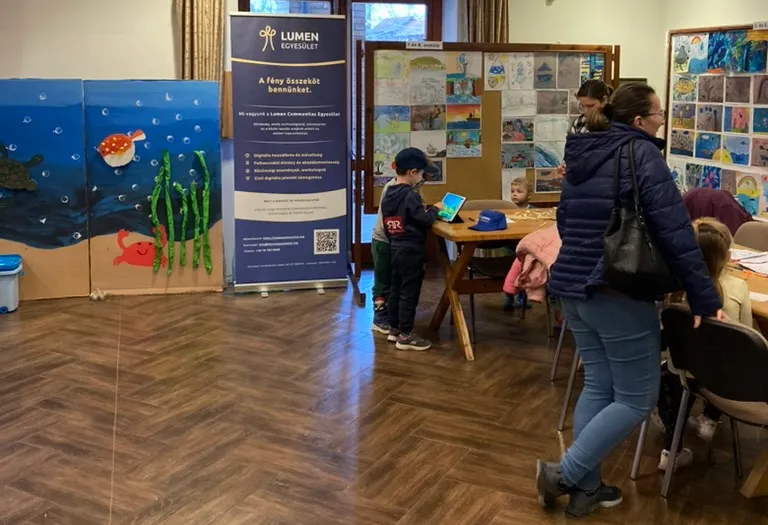
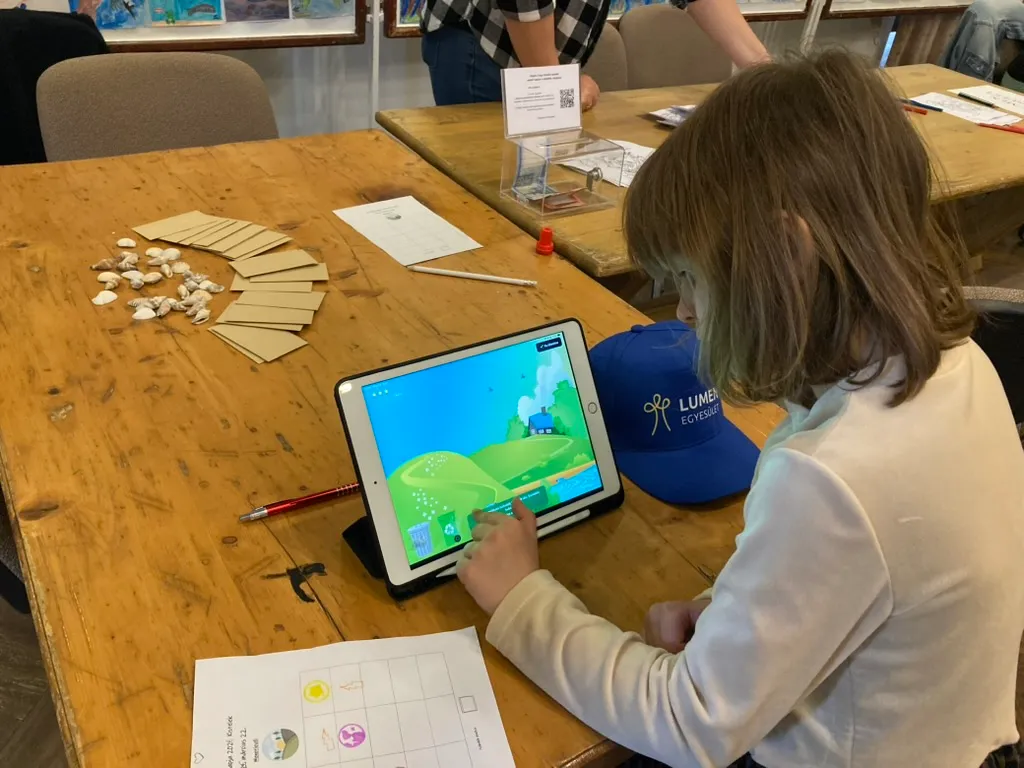
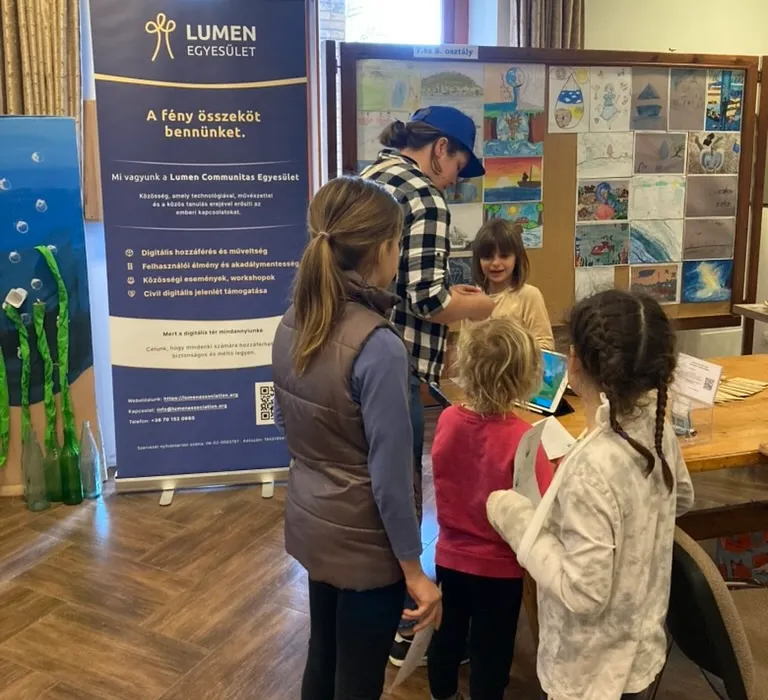
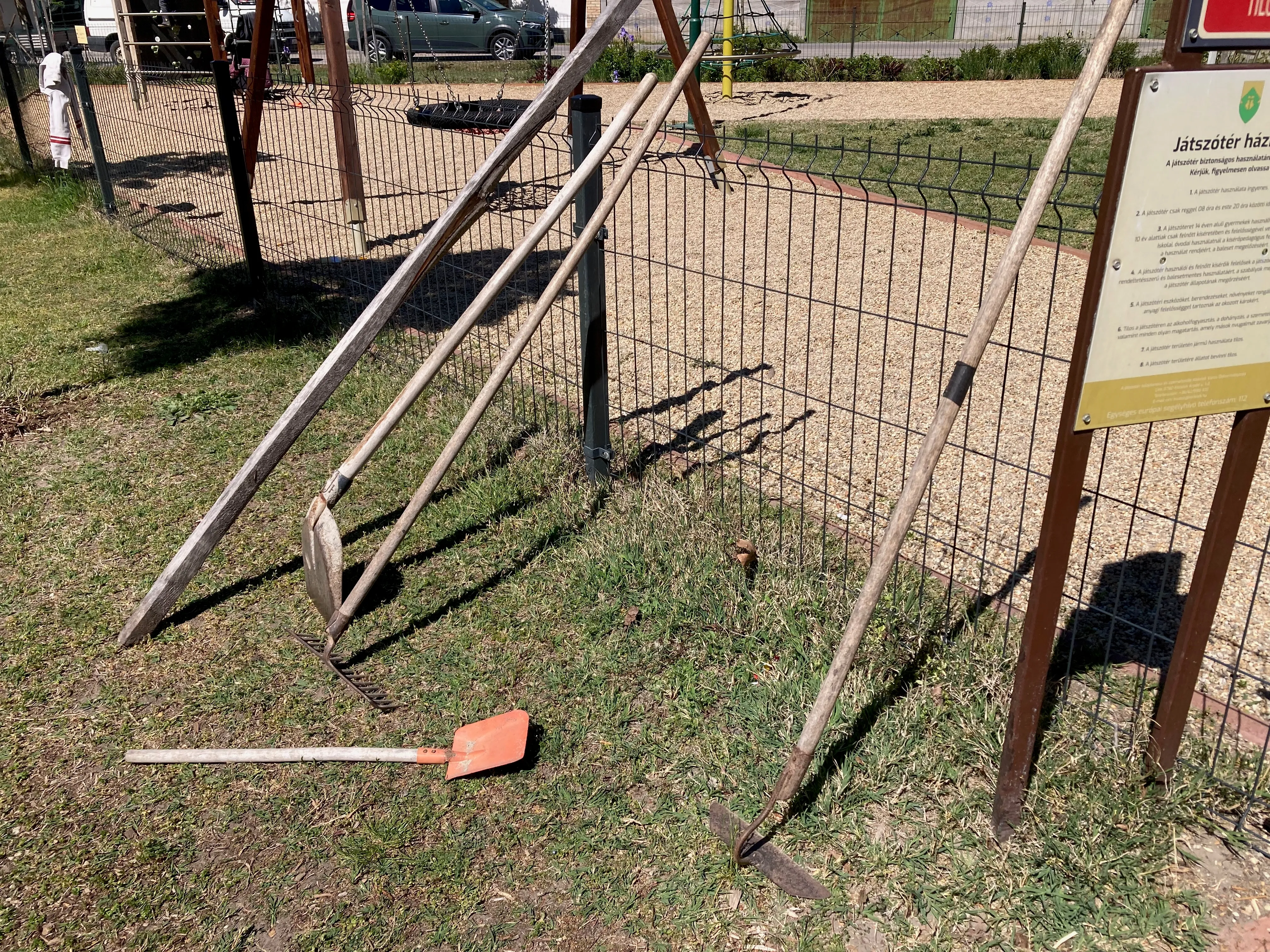
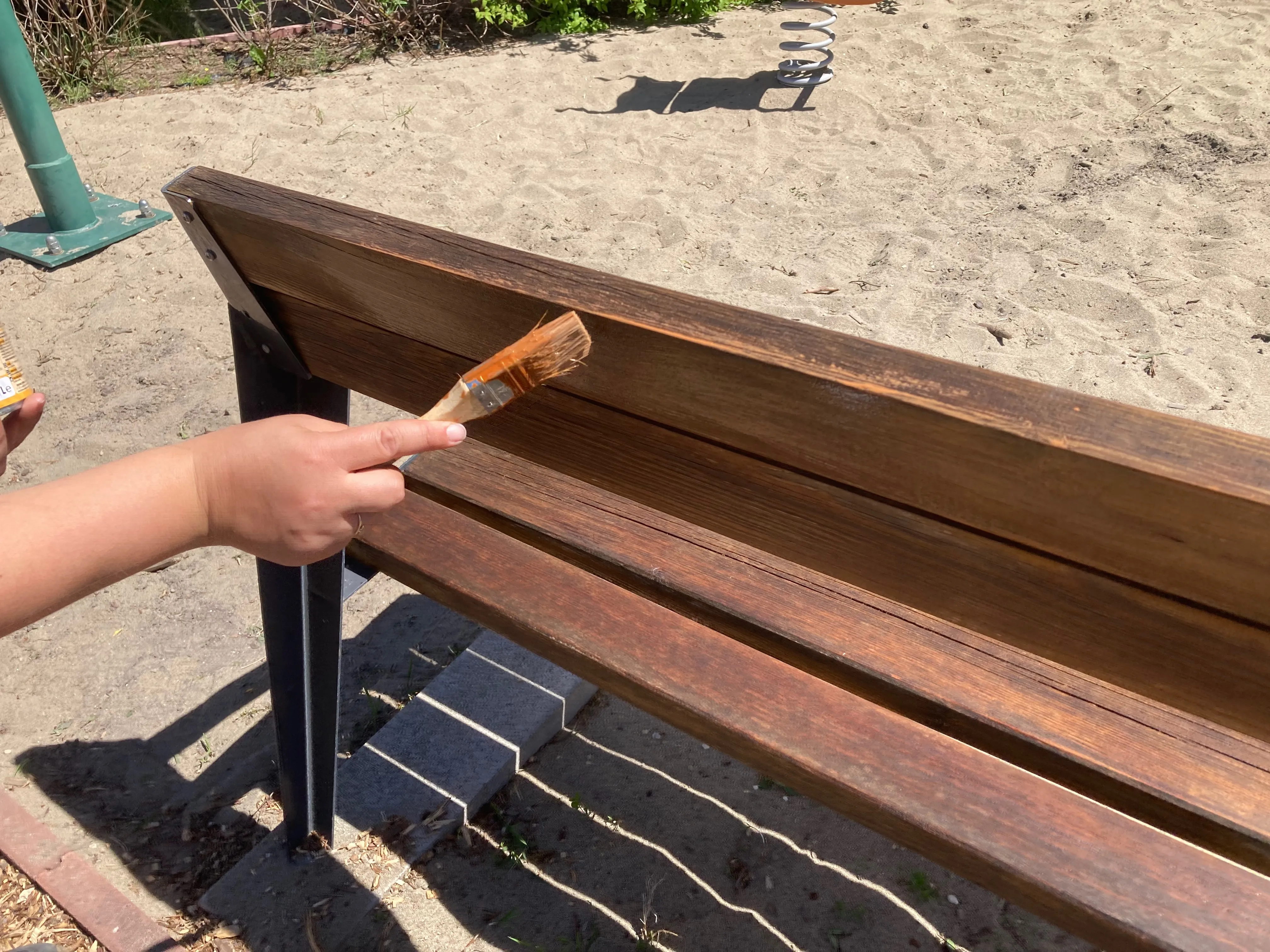
In April, we also joined the “Adopt a playground in Kistelek!” initiative. Together with our volunteers, we helped renovate and improve the playground near the mayor’s office, adopted by Zöld ÚtON Association.
This day was important to us because we did not join with a stand or digital tools, but with hands-on volunteer work. At the same time, we wanted to add a few small gestures to the day: we brought ice cream for the children and fresh vegetables for the shared lunch of the adults.
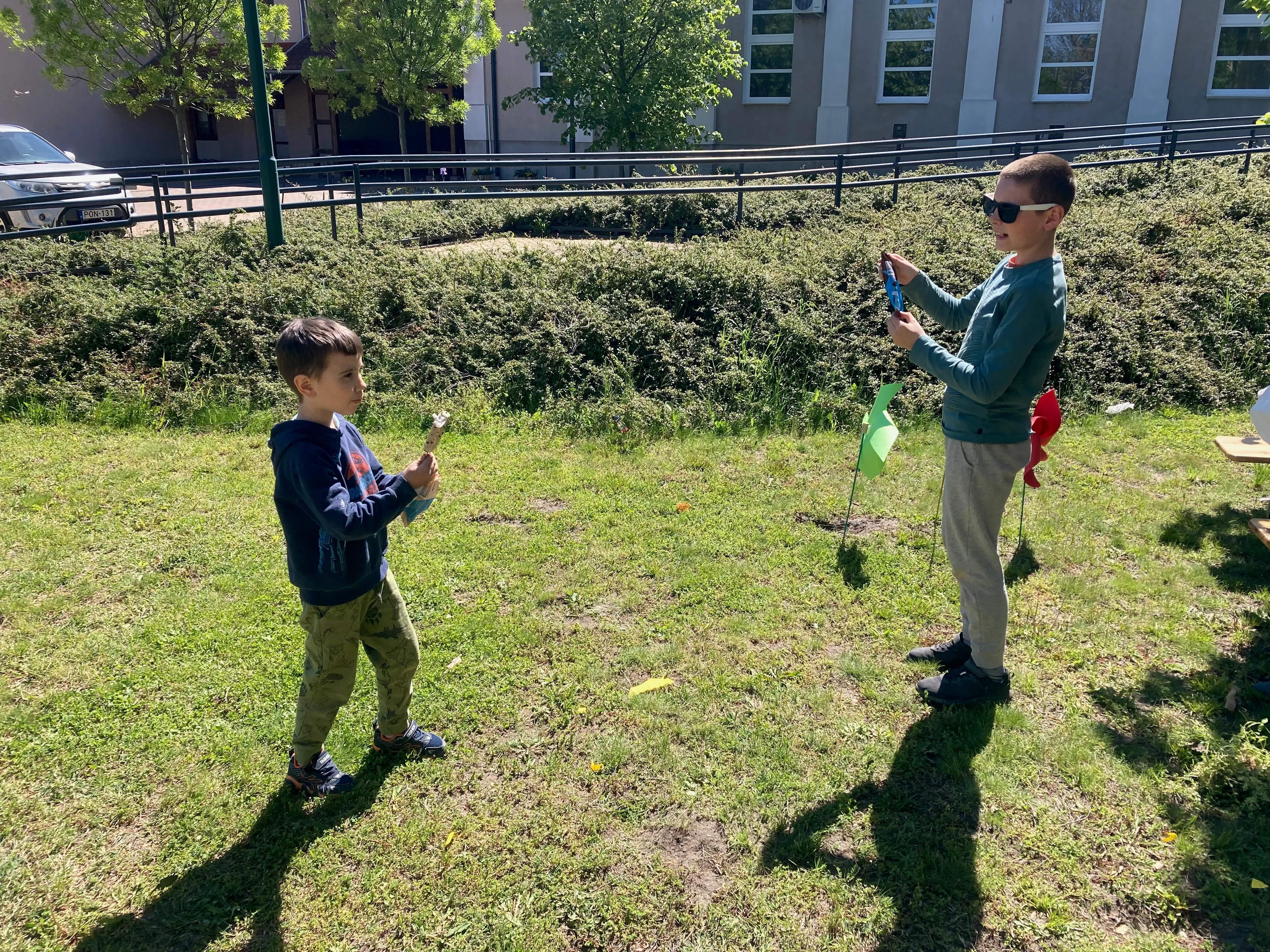
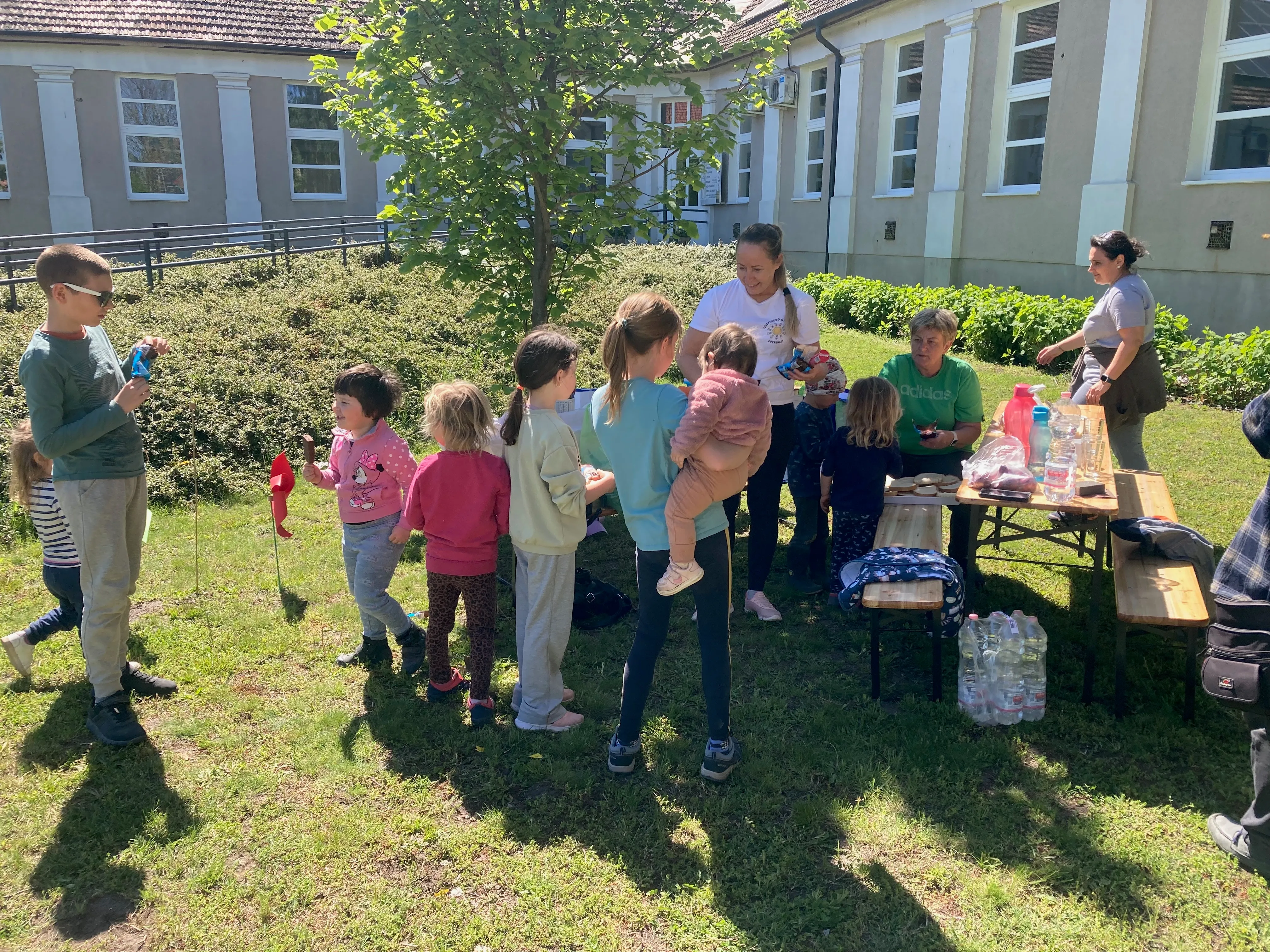
At the May Day event and the Füst és Mosoly family grill evening, we were present in a more relaxed and direct way. On these occasions, we did not prepare a large professional program. We were there with conversations, pogácsa, lemonade, hot dogs, and personal presence.
At the family grill evening, we gave out 50 hot dogs, 3 trays of pogácsa, and around 15 liters of lemonade. These may sound like simple things, but they matter to us. In the life of a young association, these meetings help people get to know us, ask questions, connect with us, or simply see that we are present.
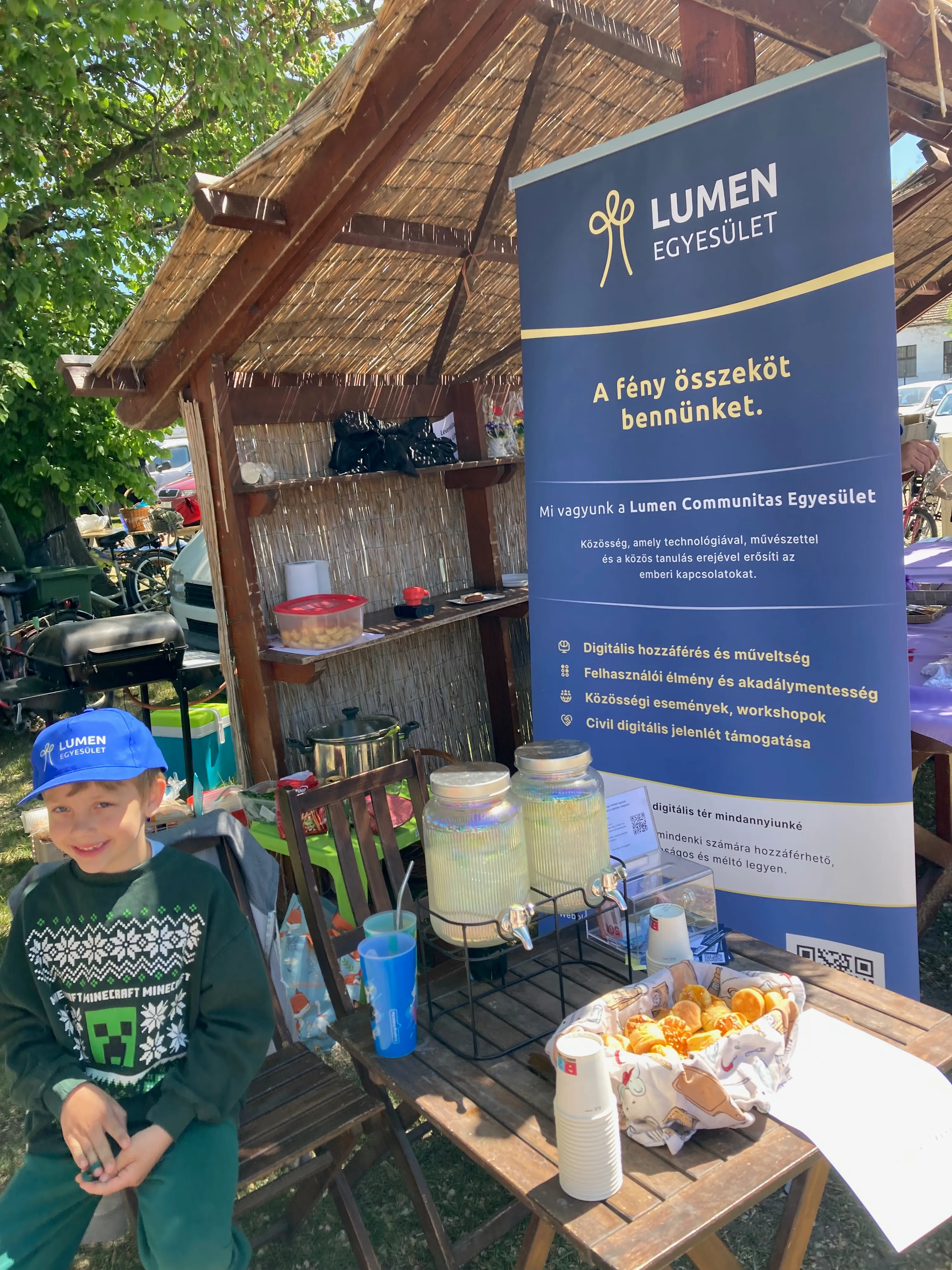
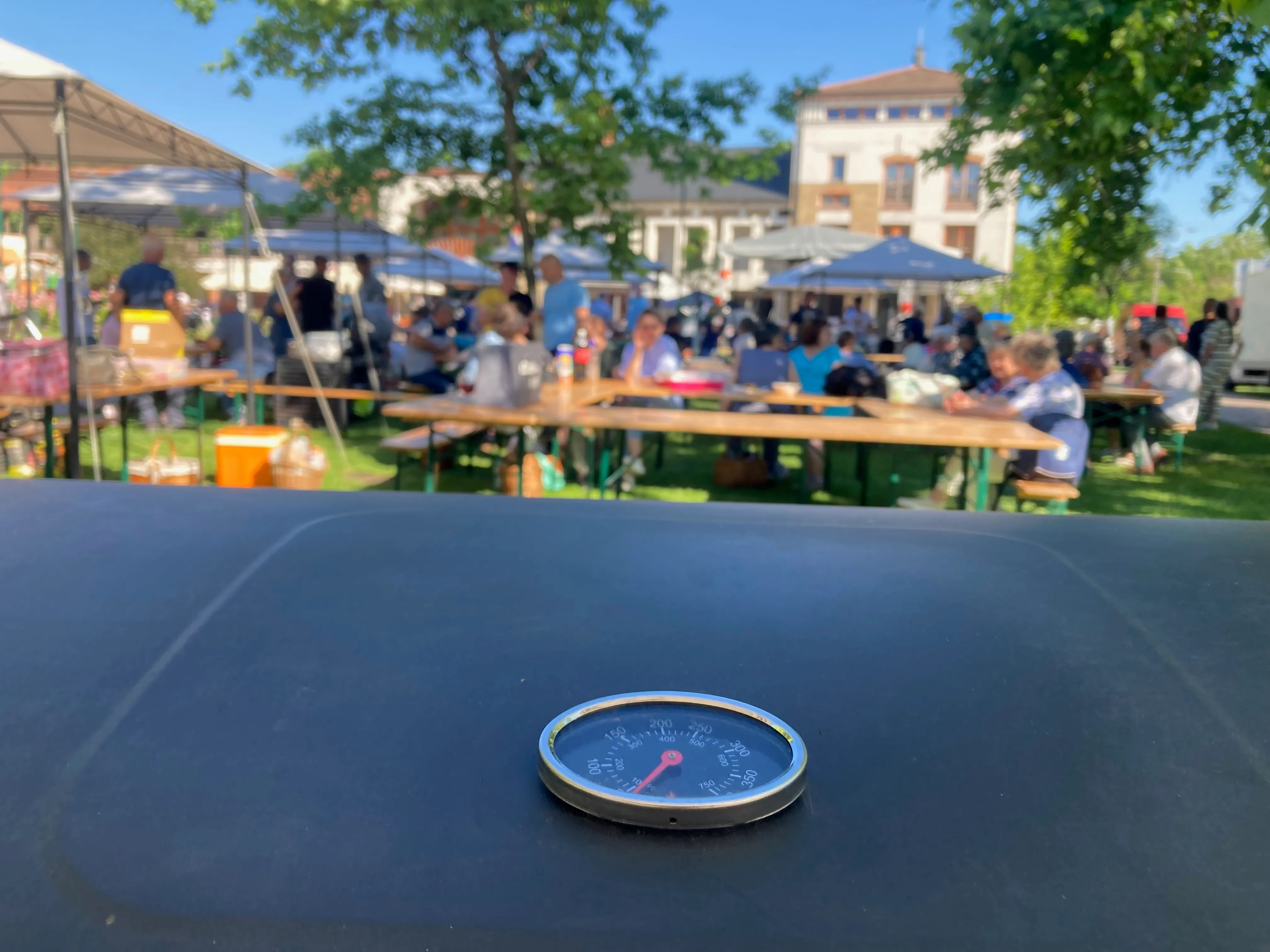
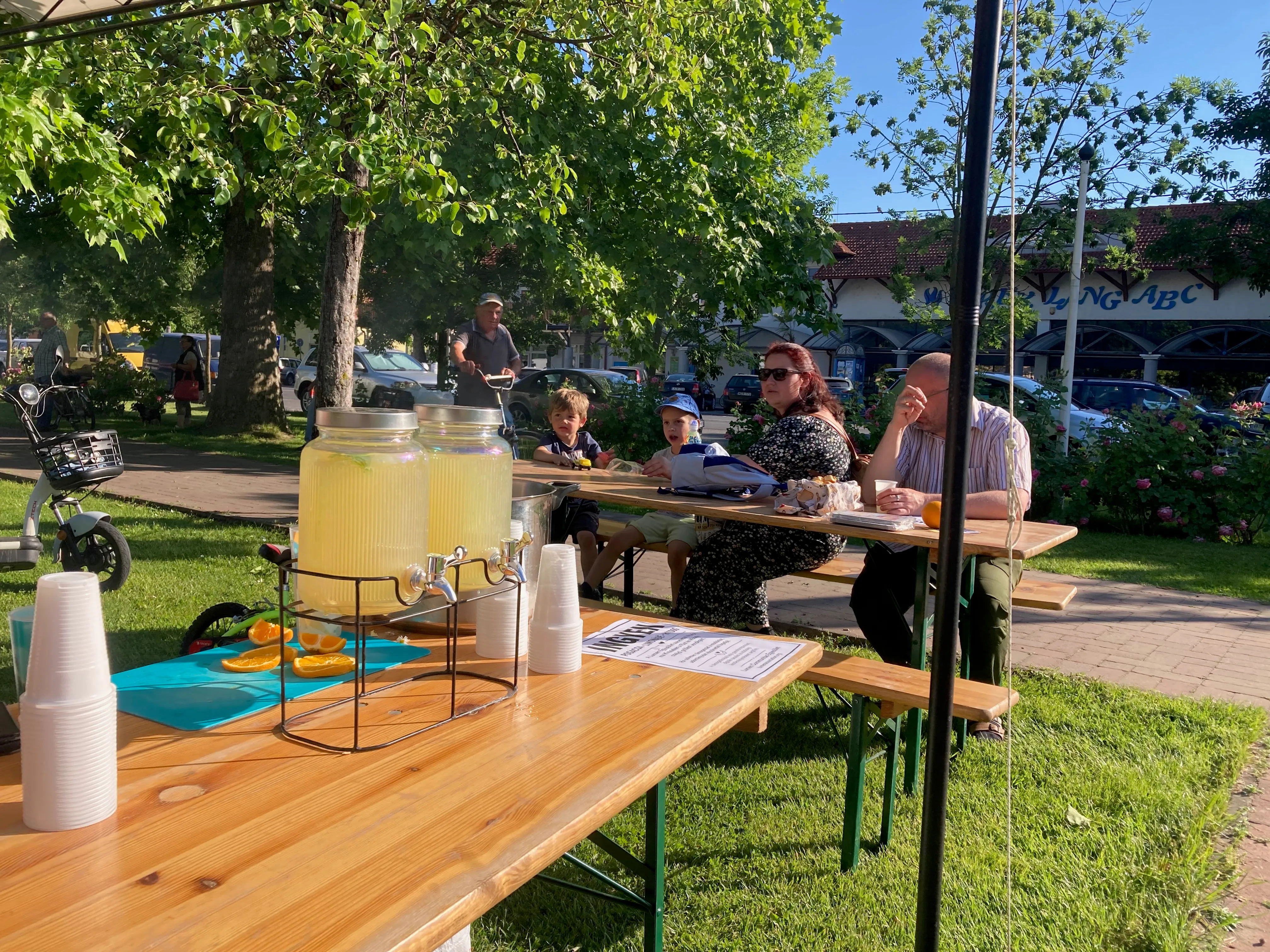
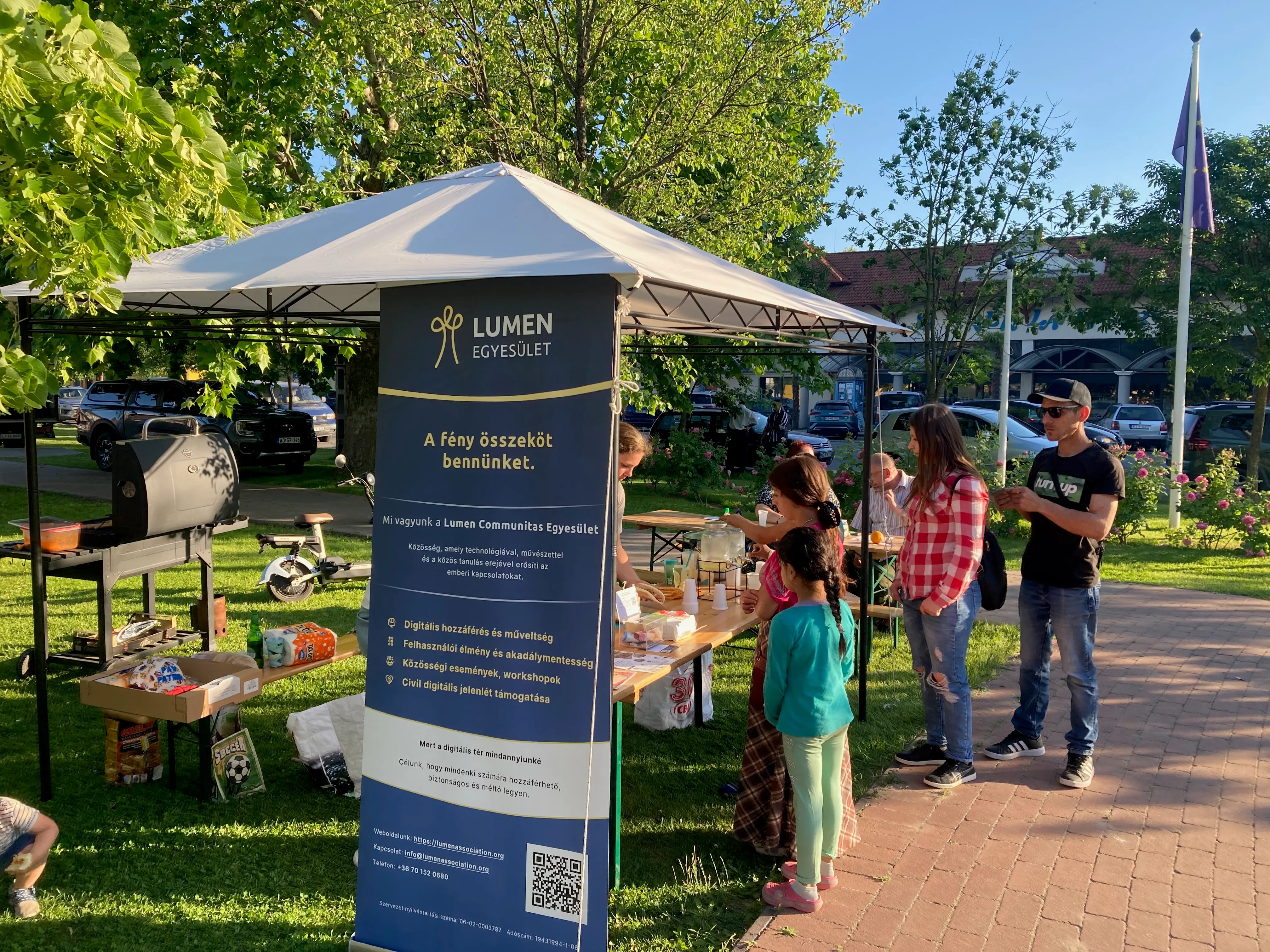
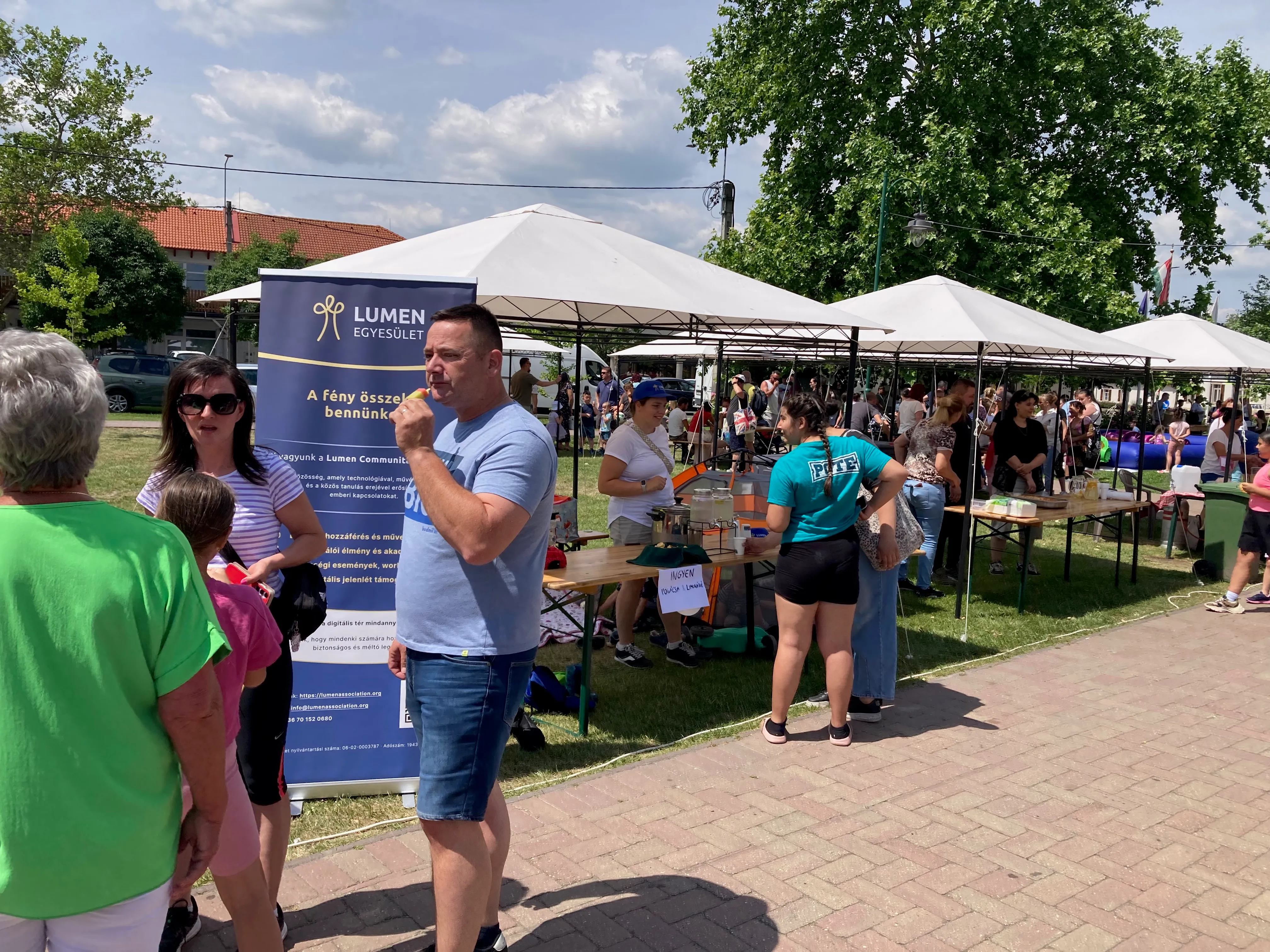
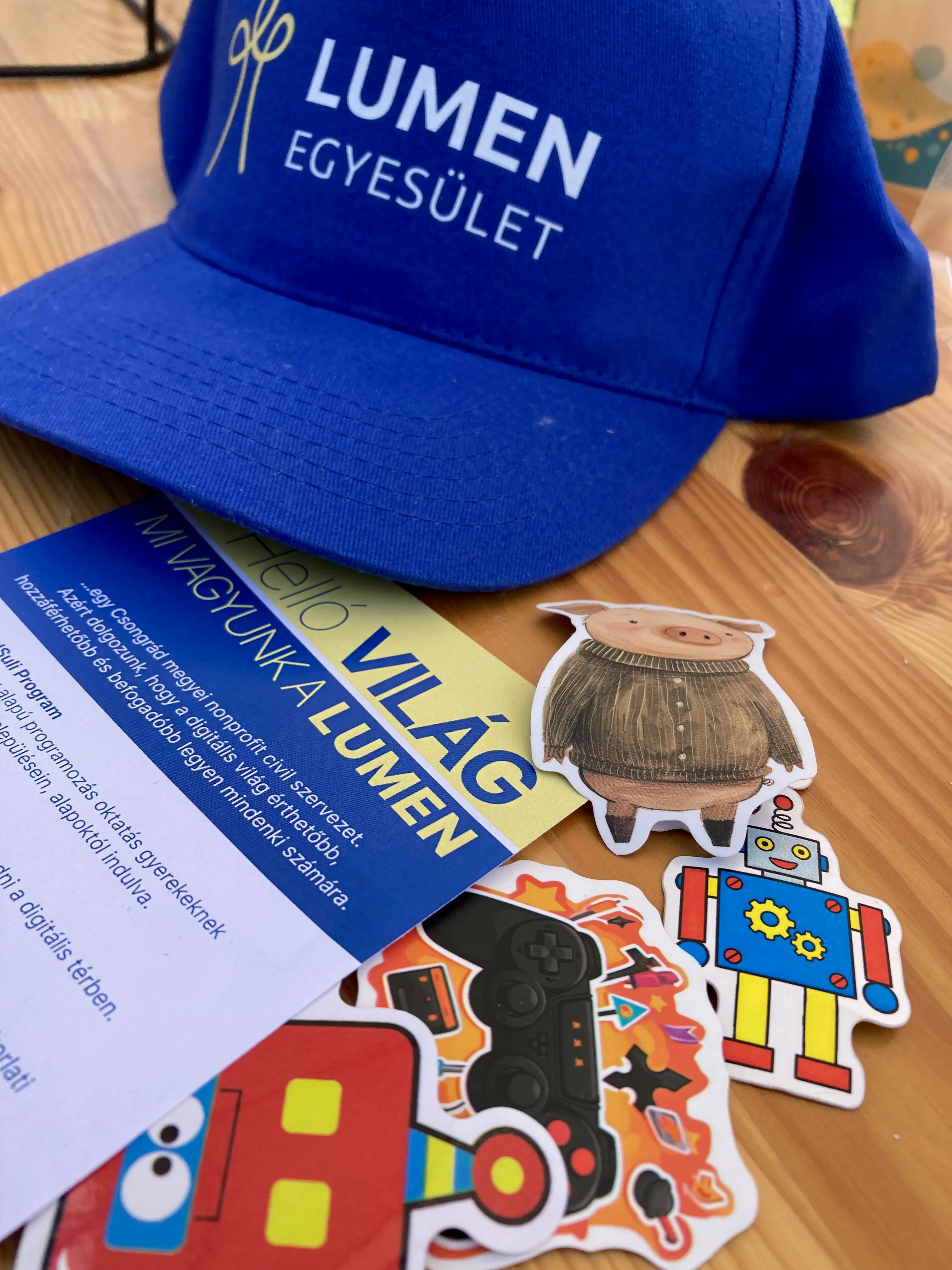
Within our possibilities, we tried to prepare for every event in a way that allowed us not only to be there, but also to give something. At some events, we brought games, digital tasks, or flower seed packets. At others, we brought chocolate, gummy candy, stickers, ice cream, pogácsa, lemonade, or hot dogs. These are small gestures, but they matter to us because Lumen’s first year is built from many personal meetings like these.
Technology, learning, young people: connecting with WRO
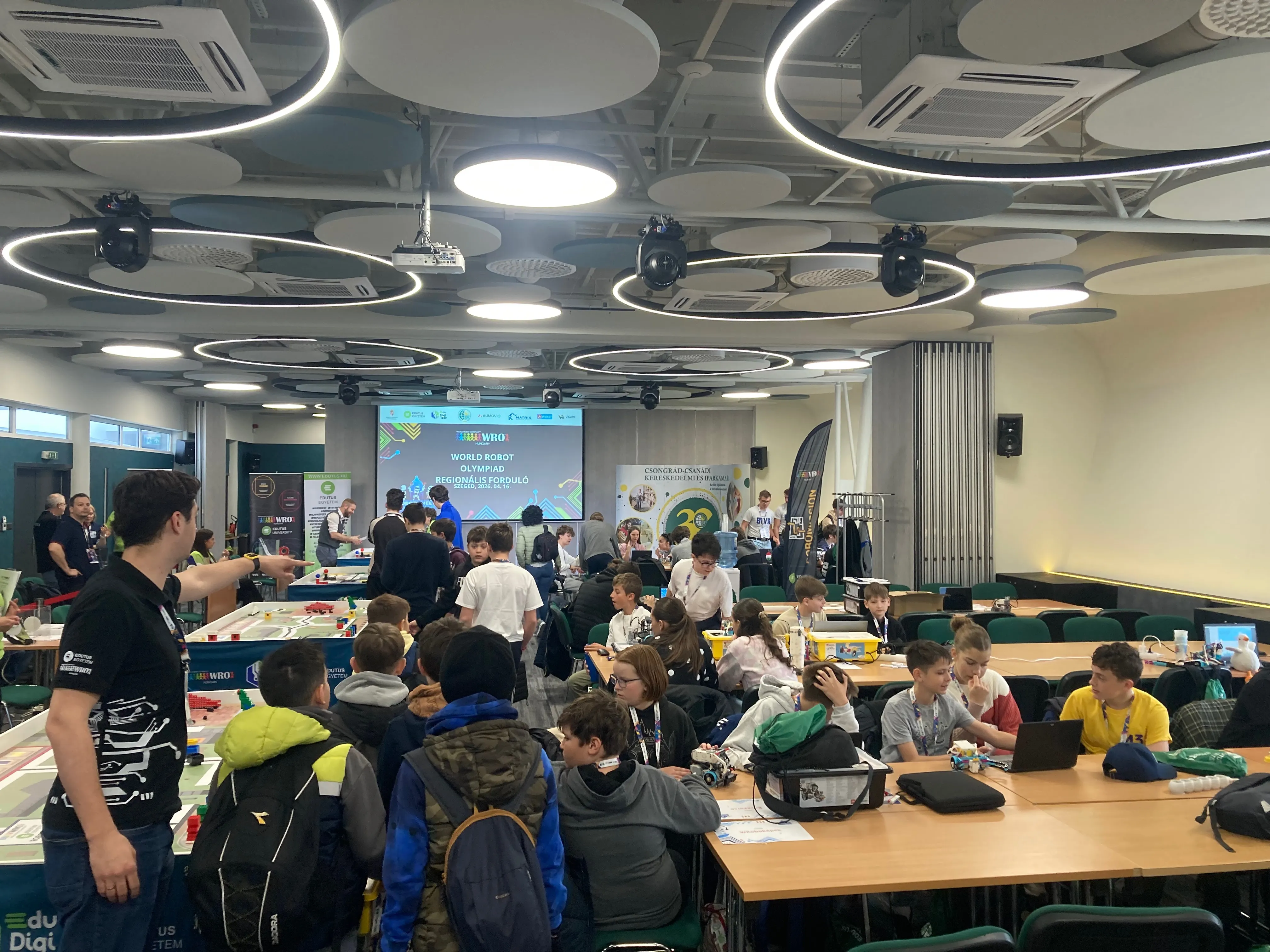
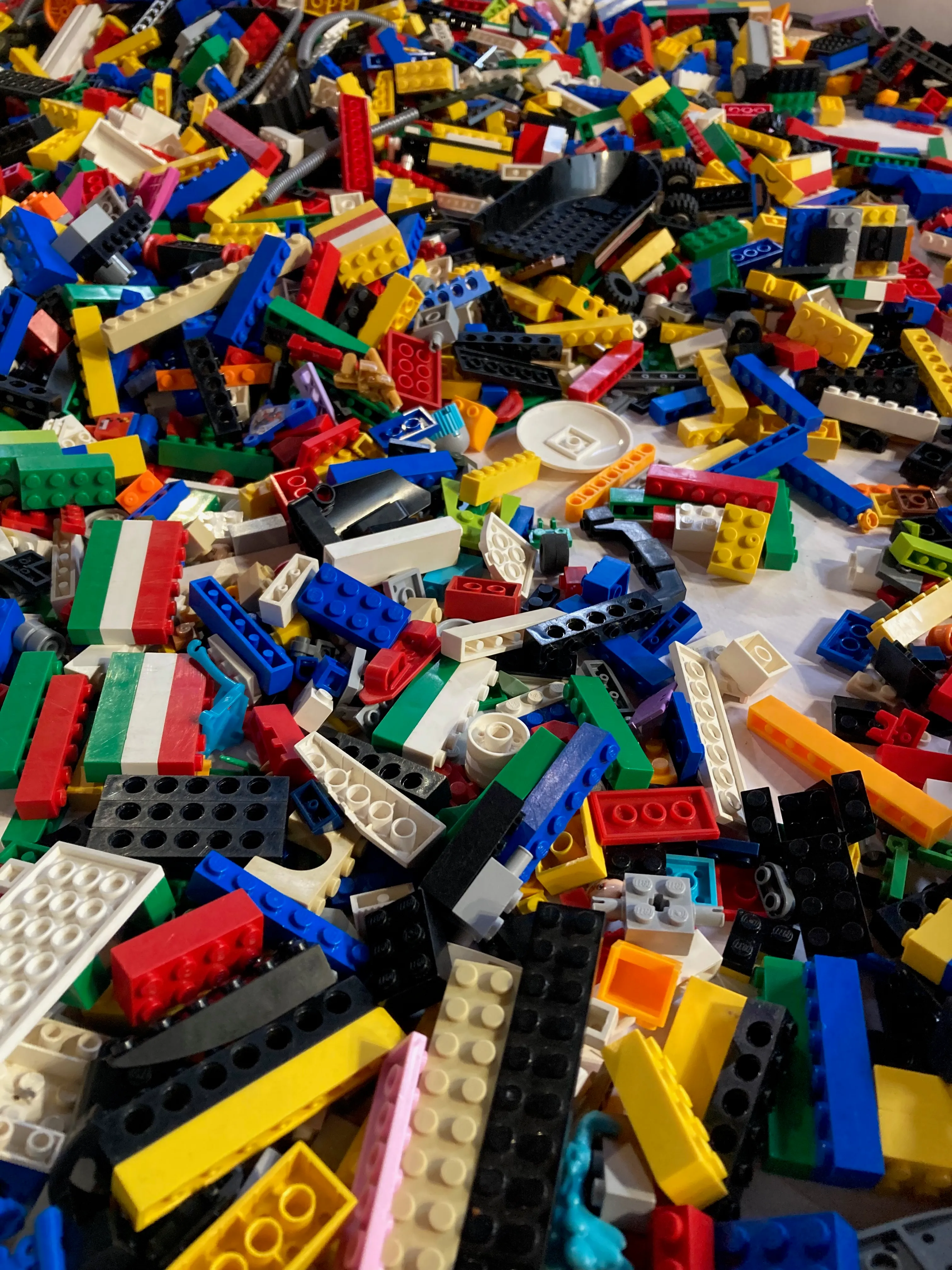
In the first half of the year, we also connected with the events of the World Robot Olympiad, or WRO. WRO is an international robotics competition where children and young people work in teams, build and program robots, solve problems, and practice skills that are becoming more and more important in the digital world.
We took part as volunteer helpers at the regional round in Szeged. It was good to see how many ideas, creativity, and persistence the competitors brought with them. We also surprised the participating children with 150 chocolates, 50 small packs of gummy candy, and sticker packs connected to the theme.
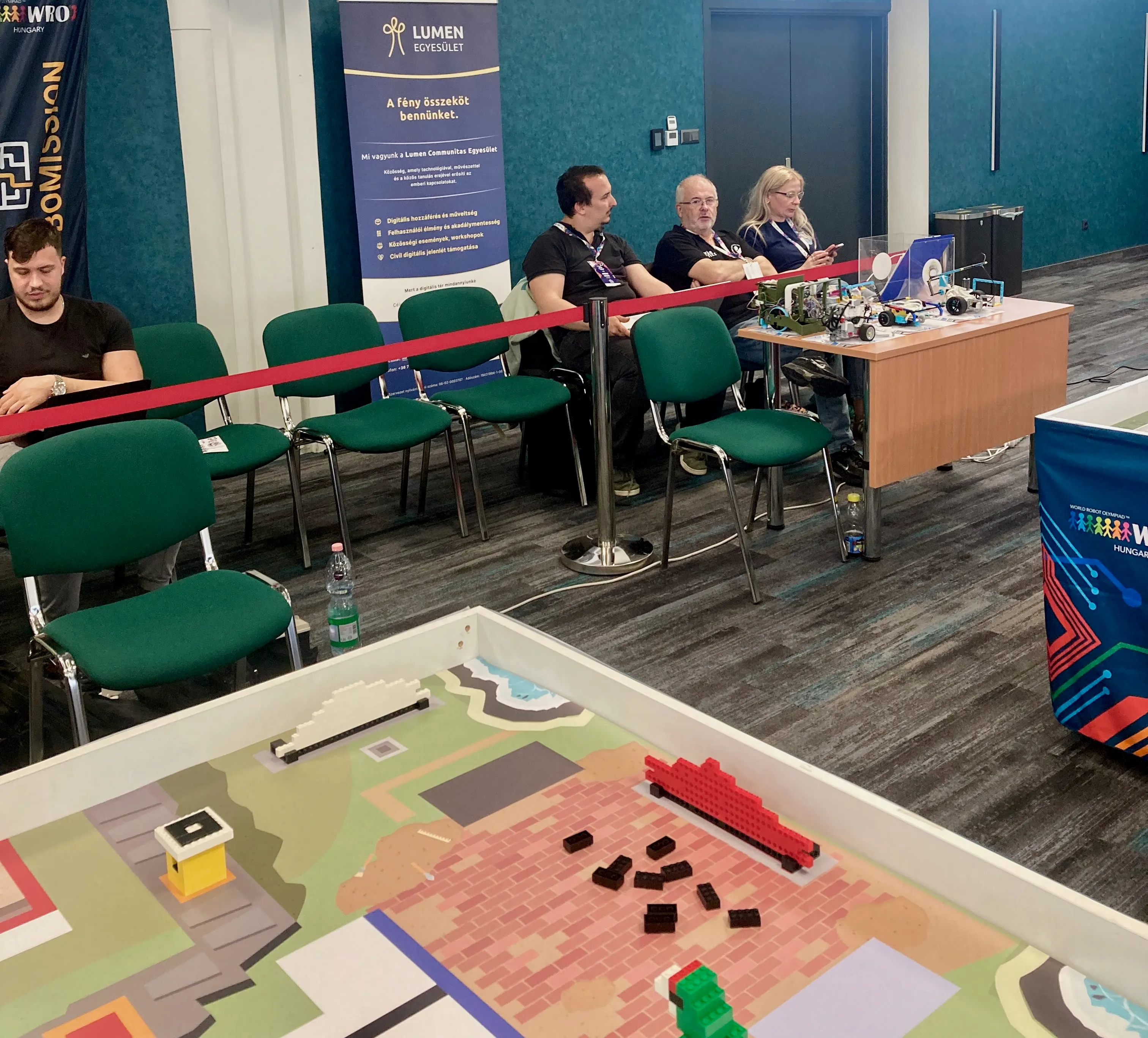
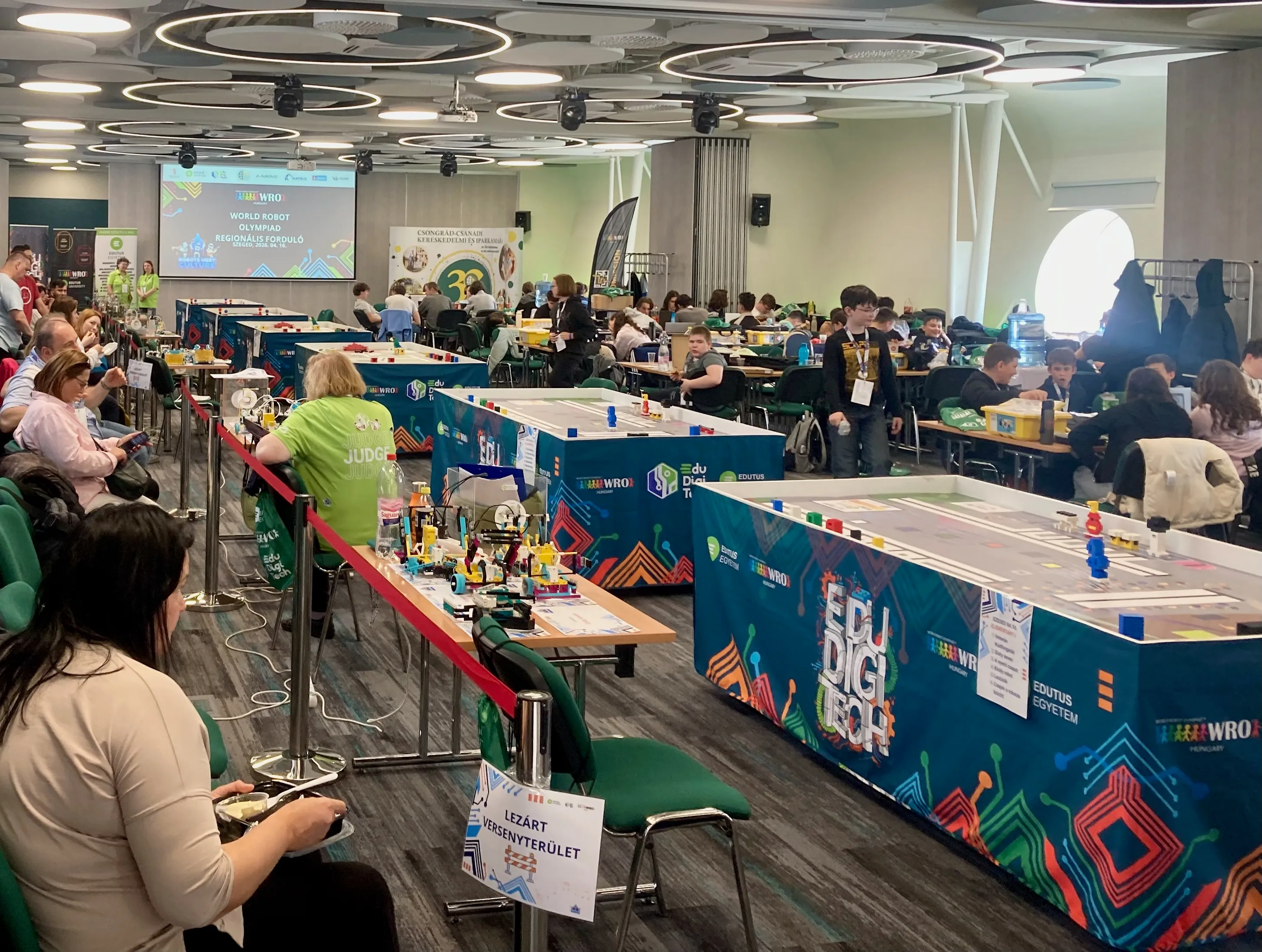
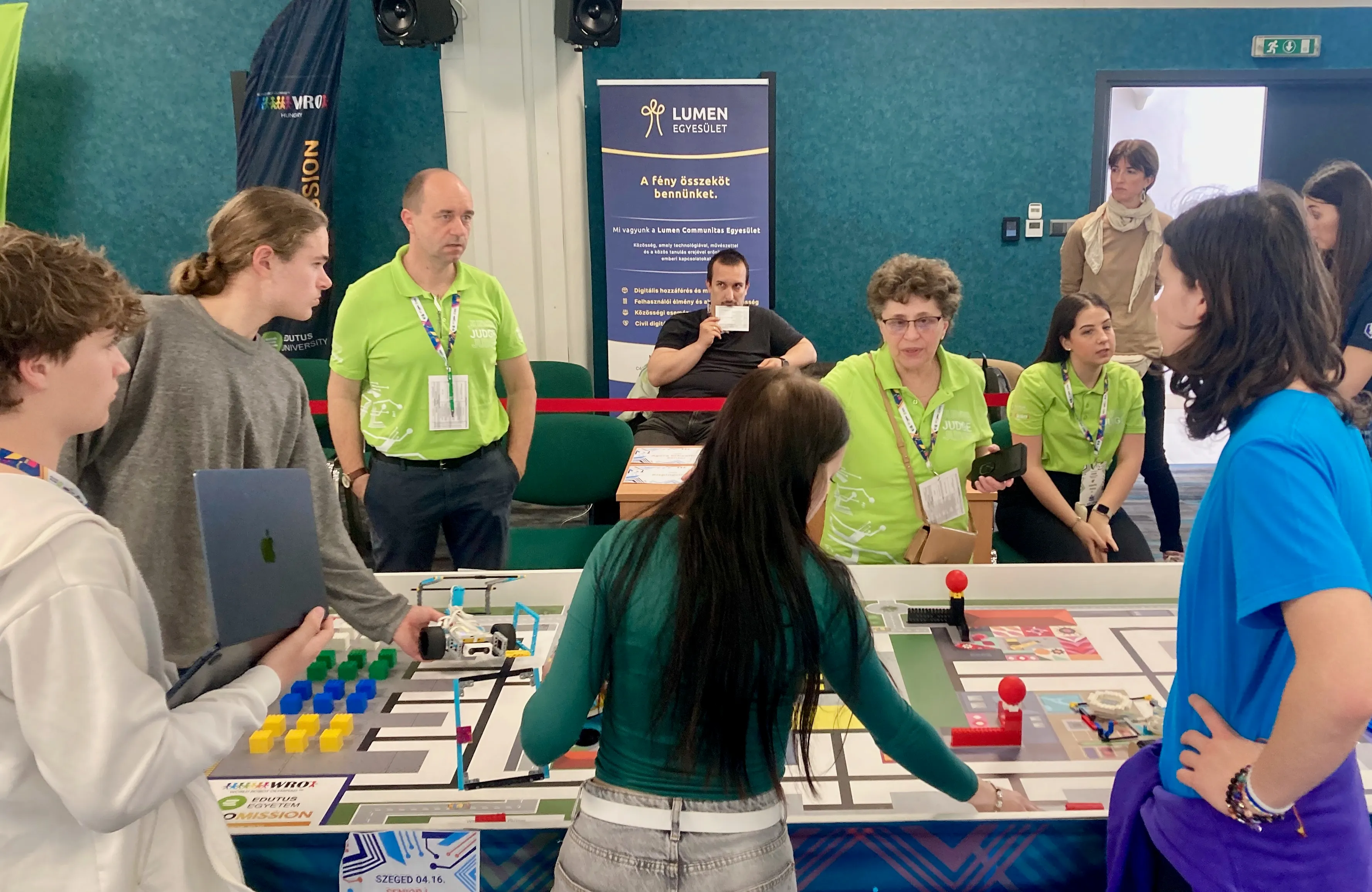
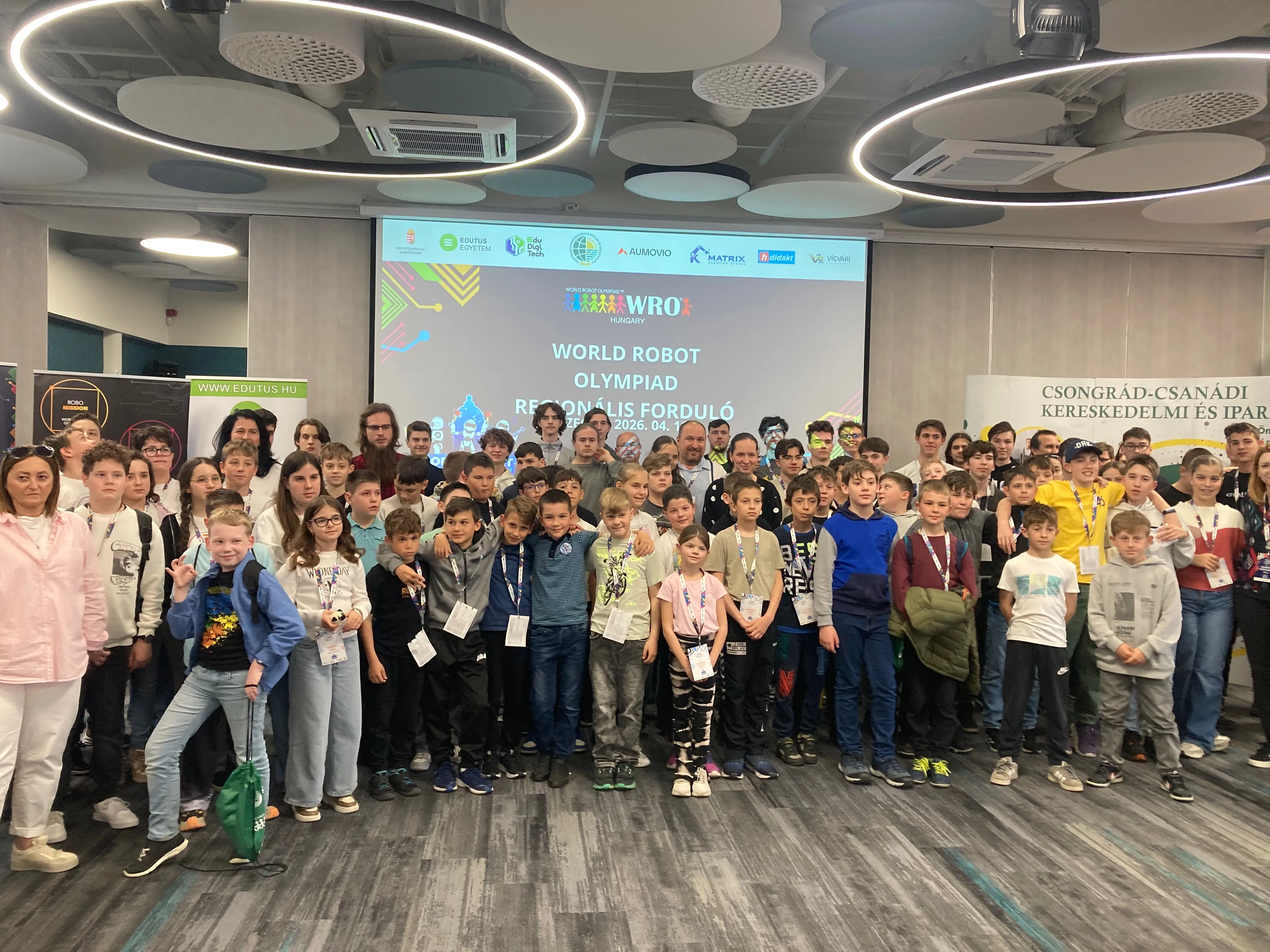
Our connection with WRO continued later as well: we were also present as judges at the Serbian national final. This was an especially important sign for us, because it showed that, as volunteers and as professional contributors, we can connect not only locally, but also across borders to initiatives built around technology, learning, and the future skills of young people.
Robotics, programming, and playful problem-solving are close to the direction that Lumen would like to represent in the long term. We would like more children to meet technology not only as users, but also as creators.
Digital accessibility: our first independent event
The largest program of our first half-year was our family event connected to Global Accessibility Awareness Day. This was Lumen’s first independent event, and in many ways it was an important milestone for us.
The goal of the program was to bring accessibility closer to participants through simple, personal, and hands-on experiences. We did not want to build the day around long presentations. Instead, we planned interactive stations, games, tasks, and short conversations.
At the event, there was a wheelchair obstacle course, a dark room, digital accessibility stations, simulation tasks, a relaxation station, a creative and play corner, and an accessibility quiz. At the digital stations, we tried to show situations that can be familiar to many people during everyday digital administration, learning, or information seeking. These included reduced vision, reading difficulties, attention-related challenges, and limited movement.
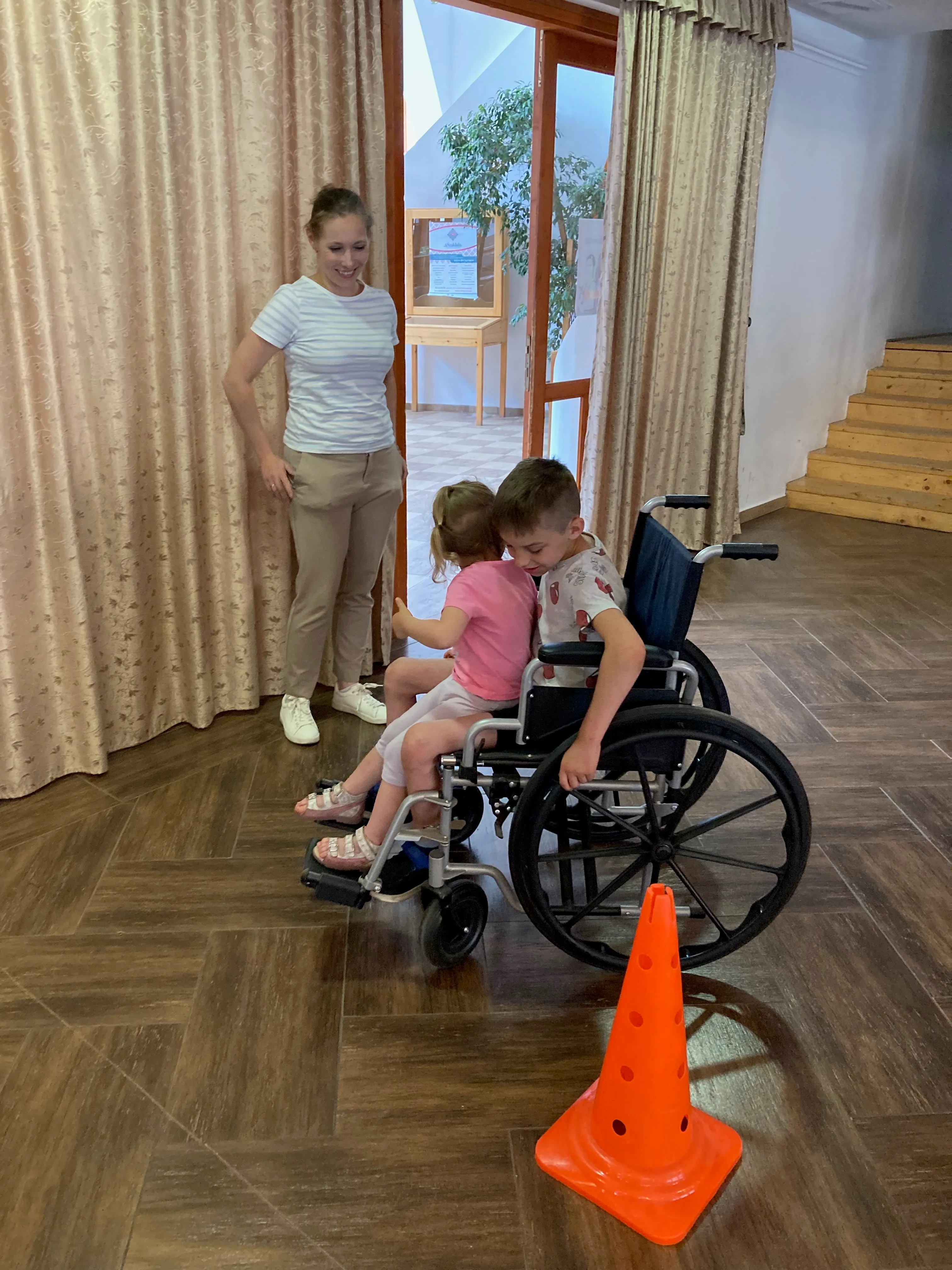
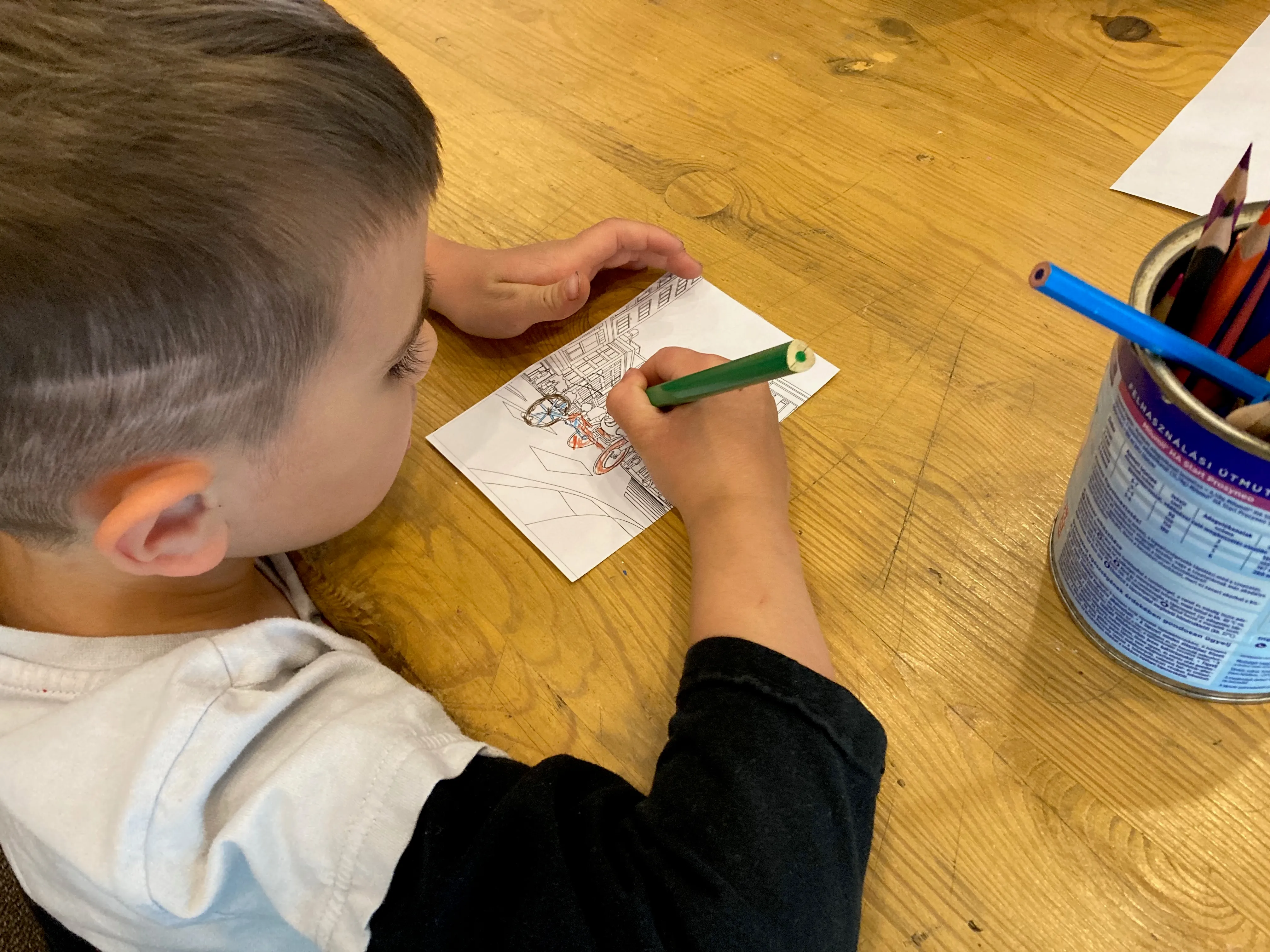
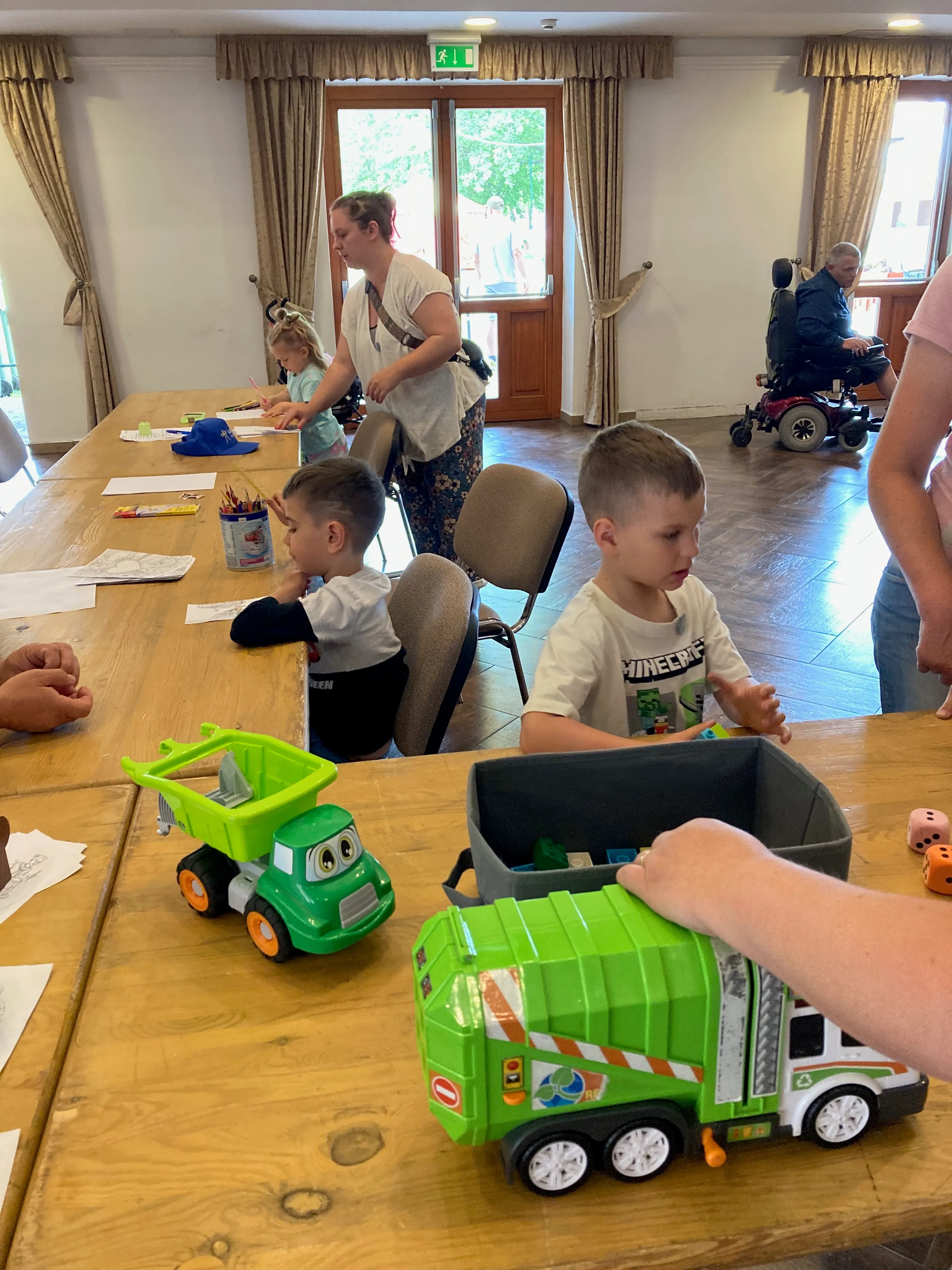
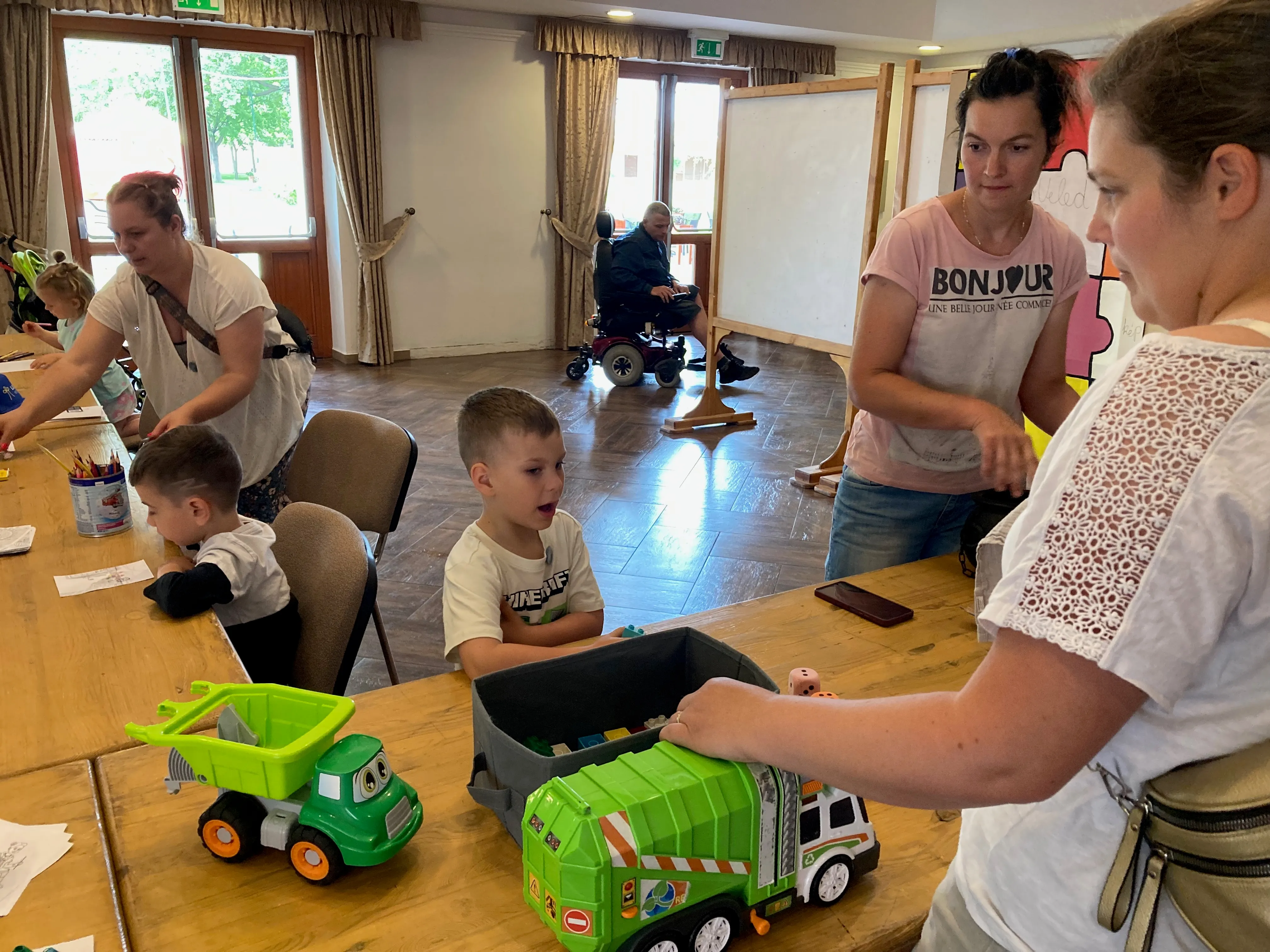
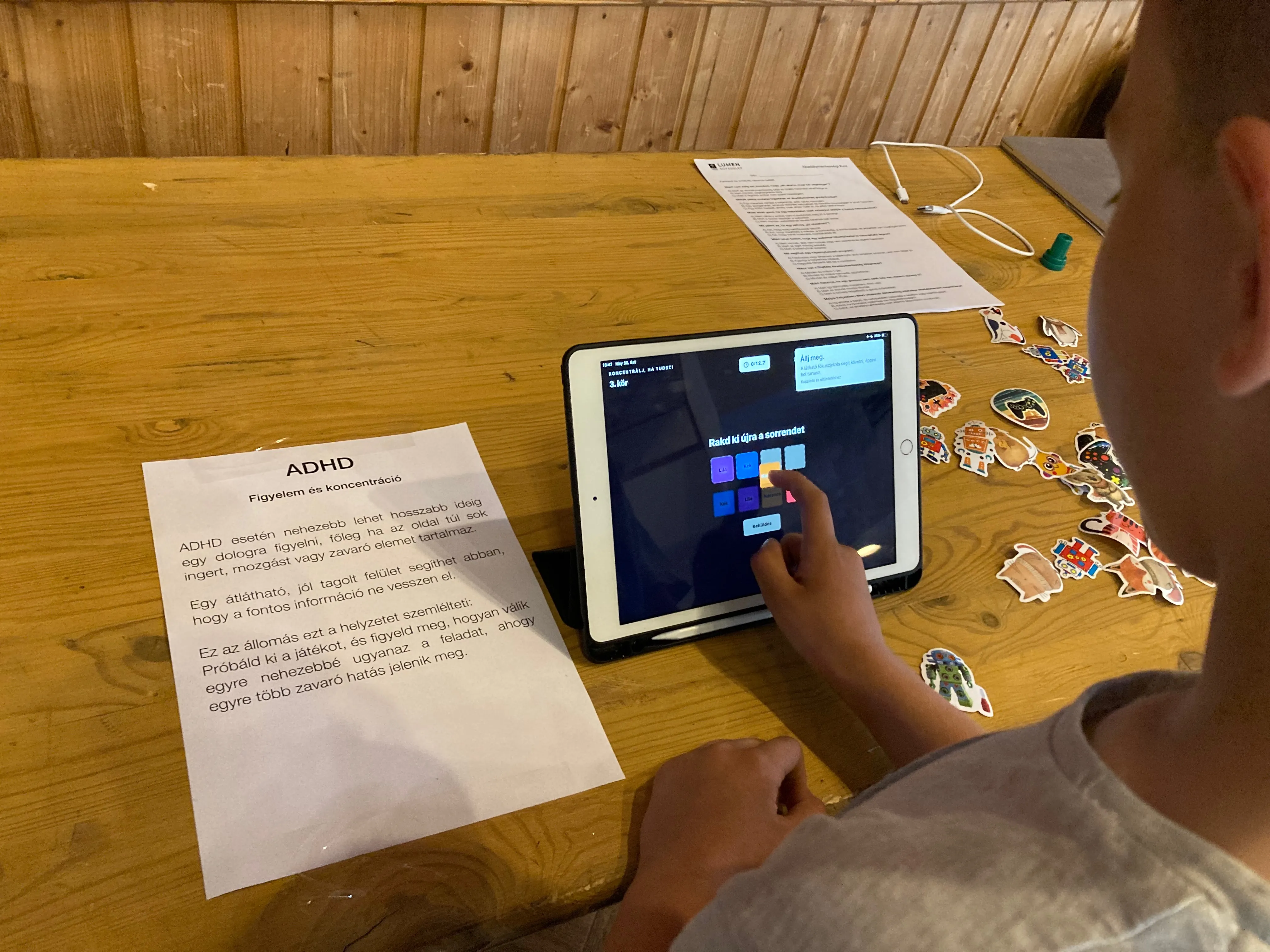
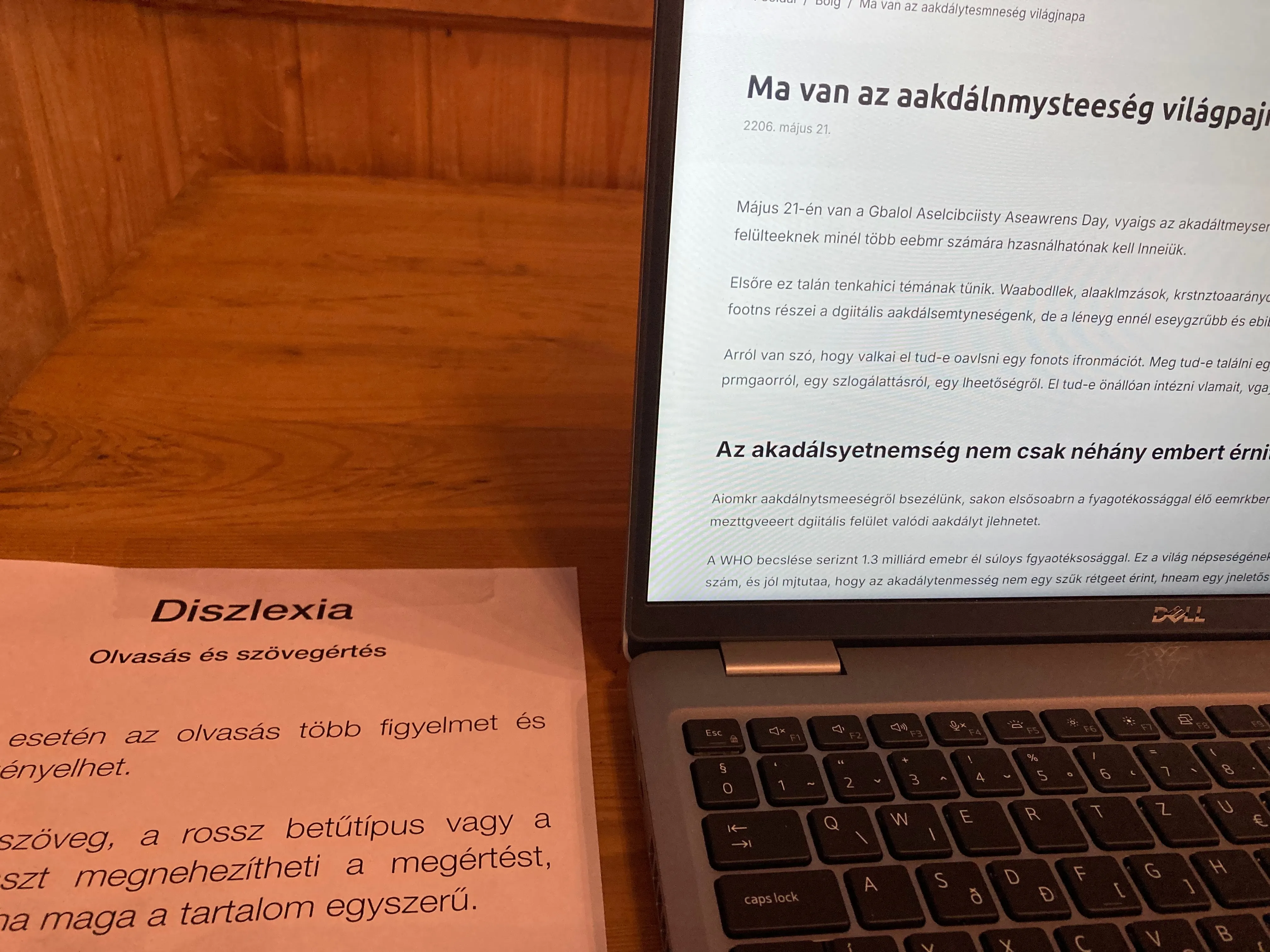
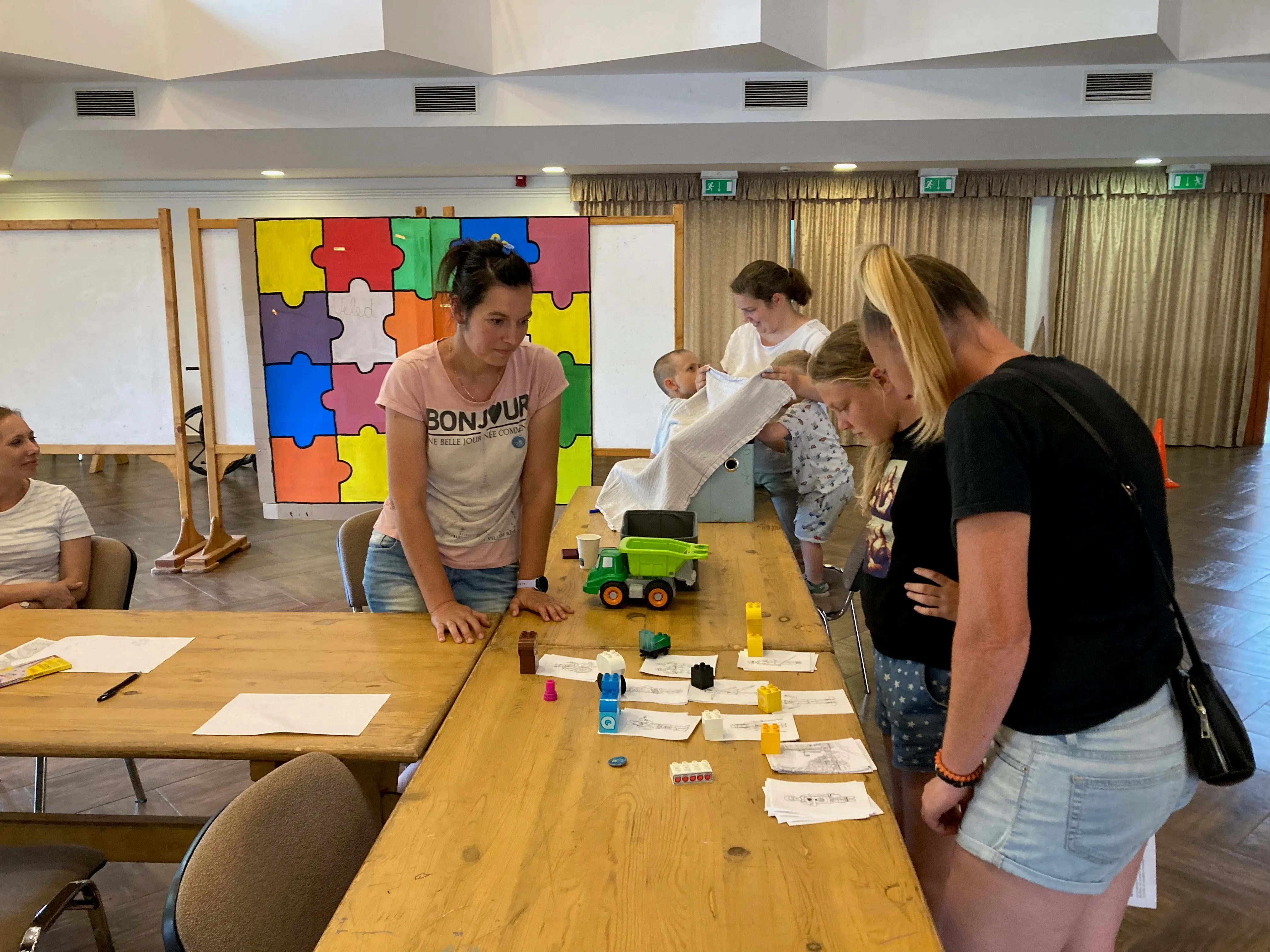
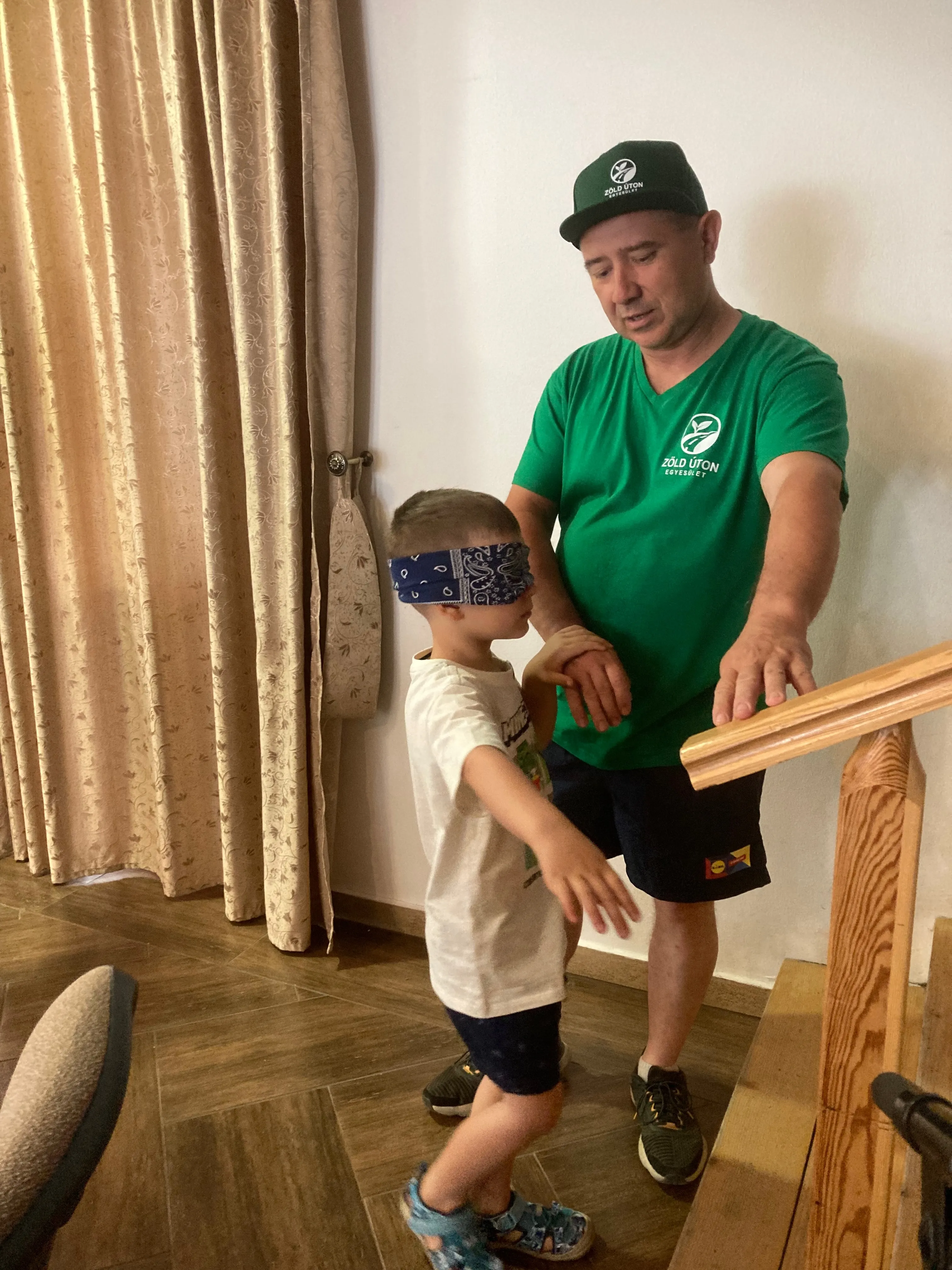
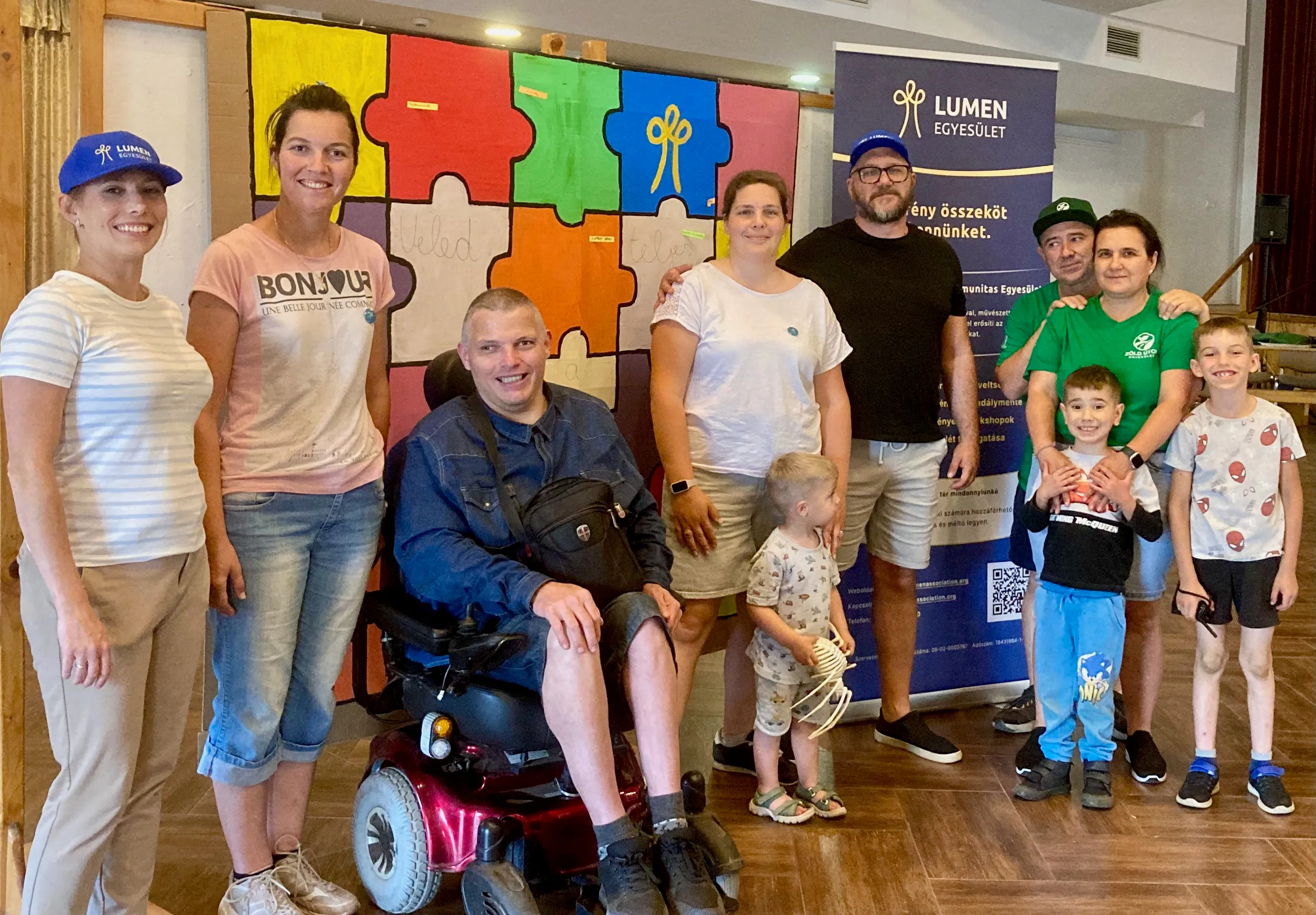
One important experience was that accessibility can be discussed in a simple, human, and playful way. Children often connected to the tasks very naturally, while adults often understood the importance of accessibility more clearly after trying one of the situations themselves. A website, app, or digital service can make a real difference depending on how usable it is in different life situations.
We received a lot of help in organizing the event. We thank the Municipality of Kistelek and Kárpátia Kincsesház for their support, EPAM Systems for providing the demo devices for the digital stations, Onyx Restaurant for the tables at the relaxation station, and Zöld ÚtON Association for their volunteer help.
Built from volunteer work, donations, and shared effort
As a young association, we currently have limited access to larger funding sources. Because of this, volunteer work, donations, member contributions, and different kinds of support play a very important role in our operation.
Most of our programs in the past few months were made possible by these small but very important contributions. Some people gave their time. Others helped with tools, food, organizing, transport, on-site support, or professional knowledge. For a young civil organization, these contributions are not extra details. They are the foundation of how we work.
Alongside the visible programs, we are also building our organizational and technological background. This year, we joined the Google for Nonprofits program, and our application to the Apple Developer Program as a nonprofit organization is currently in progress. This is important because we would like to work on mobile development in the next period as well.
Our goal is to create digital solutions that help share culture, learning, and community values. We will share more details about this later.
What did we learn in the first half-year?
One of the most important lessons of the first months was that personal presence matters. A conversation at an event, a game tried together, a flower seed packet placed in a child’s hand, or an accessibility task can often say more than a long introduction text.
We also learned that local cooperation matters a lot. Civil organizations, municipalities, institutions, companies, volunteers, and private individuals can create much more together than they could separately. Almost every program of our first half-year was built on these connections.
Another important lesson was that digital accessibility and digital literacy are not distant or abstract professional topics. They are everyday issues. They are about whether someone can manage something online, understand an interface, access information, learn, ask questions, create something, or take part in something.
And perhaps it is already visible that, for Lumen, technology is not important for its own sake. We see it as a tool: a tool that can help people learn, connect, access information, understand, create, and build community.
Where do we go next?
One of our important plans for the next period is the preparation of Lumen CodeSchool. This will be a free program for children and young people, supported by the community, where learning will not be based only on theory, but also on creating something real.
Our goal is for participants to get to know the basics of programming through methods that are similar to real software development. We want them to work together, think in steps, plan, try things, make mistakes, fix them, and have something at the end that they can proudly show.
This could be programming a robot or creating a playable video game, which they can present to their parents and other interested visitors at the end of the program.
In the long term, we would like to build stronger professional and financial foundations. This year, one of our plans is to involve CSR grant funding, partly so that we can buy the tools needed for Lumen CodeSchool.
We would also like to continue our work in the field of digital accessibility. Our plans include more demos, simple and useful content, support for local and civil organizations, and programs that help bring this topic closer to people who have not met it much before.
We would also like to keep building the digital and cultural directions that we are still speaking about carefully for now. Mobile development, the digital presentation of local values, and making community knowledge available in new ways are all areas where we see long-term possibilities.
Thank you for being with us
At the end of this first half-year, we mainly want to say thank you.
Thank you to our volunteers, association members, supporters, partners, and everyone who helped Lumen get started in any way. Thank you also to those who came to an event, stopped for a conversation, tried a task, shared our news, or simply watched with encouragement as this whole thing started to take shape.
Lumen’s first year is still only beginning to take its real form. But based on the past few months, we can already see that these small steps make sense.
We continue from here.